Get in touch

Technical journey

How the skills
compounded.

Each era taught me something that made the next one possible. This is the technical thread that connects everything.

2013 — University & Teaching

Statistical foundations & the first model that mattered

While teaching at the university and starting my master's, I built an ARIMA model to forecast Colombian inflation. It saved my team hours every week and changed how I thought about data.

ARIMA models Time series analysis Statistical inference IPC forecasting Teaching & mentoring

This unlocked: the ability to turn raw data into something a team could act on — and the confidence that a good model beats manual work every time.

Hover over images to discover use cases

IPC Inflation Forecast — ARIMA(2,1,1) 8.0% 6.0% 4.0% 2.0% Jan Mar May Jul Sep Nov Jan Mar 5.2% 6m forecast 6.8% Conf. interval 95% RMSE 0.31 ▬ Historical - - Forecast 95% CI
Inflation Forecasting
Used ARIMA(2,1,1) to forecast Colombian IPC index. The model predicted inflation trends 6 months ahead, replacing hours of manual estimation with statistical precision.
Hover to see use case
Stock Forecast — Random Walk w/ Drift $80 $60 $40 $20 Drift (annual) +8.2% Volatility (σ) 22.4% 12m target $47.20 Historical Simulated paths $42.10
Price Forecasting
Random walk with drift models capture the stochastic nature of asset prices. By estimating drift and volatility, we can simulate thousands of possible future paths and derive probability-weighted targets.
Hover to see use case
2013 – 2018 — Investment Banking

Financial modelling at institutional scale

Five years leading a team of analysts at one of Colombia's major banks. I managed projects worth over €300 million, building models that had to survive scrutiny from boards and regulators.

Financial modelling DCF & project finance Monte Carlo simulation Probabilistic distributions Stakeholder communication Presentation skills Leadership under pressure Project scoping & planning

This unlocked: the ability to build models that don't just calculate — they communicate. A number without a story is just noise.

Hover over images to discover use cases

Financial Statements.xlsx Income Balance Cash Flow (€ thousands) 2021 2022 2023 2024E Income Statement Revenue 8,400 10,200 12,400 14,800 COGS (5,040) (5,916) (6,944) (8,140) Gross Profit 3,360 4,284 5,456 6,660 Margin 40.0% 42.0% 44.0% 45.0% EBITDA 1,680 2,346 3,180 3,996 Net Income 1,092 1,525 2,067 2,597 Free Cash Flow 840 1,173 1,590 1,998
Financial Statement Modelling
Built integrated 3-statement models in Excel — Income Statement, Balance Sheet, and Cash Flow — to project company performance and value concession projects across Latin America.
Hover to see use case
Investment Decision Summary Net Present Value €4.2M €2.1M €4.2M €6.8M NPV > 0 ✓ Internal Rate of Return 18.7% 12.1% 18.7% 24.3% IRR > WACC (9.5%) Key Assumptions WACC 9.5% Terminal Growth 2.5% Horizon 10 yrs Payback Period 4.3 yrs RECOMMENDATION Proceed with investment
Investment Decision Framework
Every model ends with a decision. NPV and IRR with confidence intervals give stakeholders not just a number, but a range of outcomes and a clear recommendation.
Hover to see use case
2015 – 2018 — Risk Division

From scenarios to probability-weighted decisions

The risk division taught me to stop thinking in best/worst case and start thinking in distributions. Every scenario got a probability. Every decision had a cost of being wrong.

Risk analysis frameworks Scenario analysis with probability Sensitivity analysis Credit risk scoring Negotiation strategy

This unlocked: thinking in probabilities, not opinions. The shift from "what might happen" to "what's the expected cost of each path."

Hover over images to discover use cases

Credit Score Distribution freq Cutoff 300 500 650 750 850 REJECT APPROVE Applicant Mean score 672 Approval rate 73.4%
Credit Score Distribution
The population's credit scores follow a distribution. By setting a cutoff threshold, we separate approved from rejected applicants — balancing risk tolerance with business growth.
Hover to see use case
Credit Risk Scoring Model Customer Factors Income level Debt-to-income Payment history Employment yrs Collateral value Scoring Model logistic reg. Credit Score 742 /850 Default Prob. 1.8% Decision Approve Weights calibrated on historical default data — updated quarterly
Scoring Model Architecture
Customer data flows through a logistic regression model that weighs multiple factors — income, debt ratio, payment history — to produce a single credit score and default probability.
Hover to see use case
2016 – 2020 — Germany & Banking

Dashboards, reporting, and making data visible

Moving to Germany meant rebuilding everything — including how I communicated data. I built financial reporting dashboards that turned complexity into clarity for people who didn't speak "model."

Dashboard design Financial reporting Controlling & budgeting KPI frameworks Cross-cultural fluency German business fluency Stakeholder alignment Resource allocation

This unlocked: the understanding that the best analysis in the world is useless if people can't see it. Visualisation is not decoration — it's communication.

Hover over images to discover use cases

Financial Dashboard Revenue €12.4M Margin 34.2% EBITDA €4.2M Cash €8.1M Monthly Revenue Trend By Segment Corp · SME · Retail · Other
Financial Reporting Dashboard
Designed dashboards that turned complex financial data into clear, actionable views. KPI cards, trend charts, and segment analysis — all in one screen for fast decision-making.
Hover to see use case
Measuring What Matters — OKRs O1: Increase recurring revenue by 40% KR 1.1 MRR from €80K to €112K 80% KR 1.2 Churn below 3% 90% KR 1.3 NPS score above 70 70% O2: Build operational excellence KR 2.1 Automate 60% of reporting 95% KR 2.2 Decision cycle < 48h 60% "If it doesn't move a KPI, it doesn't belong on the dashboard."
Strategic Measurement — OKRs
Not all metrics deserve a dashboard. OKRs ensure we only track what drives real outcomes — revenue growth, operational efficiency, and customer satisfaction.
Hover to see use case
2020 – 2022 — Energy Sector

Programming reborn & the real economy

The energy sector showed me how expensive and intricate the real economy is. My programming journey restarted — Python and R became daily tools. But exploring code opened an entire world: not just data analysis and modelling, but building applications, websites, and entirely new ways to present results and products.

Python R Infrastructure modelling Renewable energy finance Data automation Web development Application building

This unlocked: the ability to code my own solutions — from financial models to full applications and websites. From consumer of tools to builder of products.

Hover over images to discover use cases

# energy_model.py import pandas as pd import numpy as np def dcf_model(cashflows, rate): pv = np.sum([ cf / (1 + rate)**t for t, cf in enumerate(cashflows, 1)]) return pv
Programming for Finance
Python became the bridge between financial thinking and automated execution. From DCF models to data pipelines, code turned manual analysis into repeatable systems.
Hover to see use case
julianvargas.de Julian Vargas, CFA Get in touch Berlin · Independent · CFA Hi, I'm Julian Vargas, CFA. I turn financial complexity into clarity... MyInvestPal LatAm IB Phronos Built with code — not a template
Building Products with Code
Programming opened the door to building complete products — this website, client-facing applications, and automated reporting tools. From consumer of software to creator.
Hover to see use case
2022 – 2024 — Independence

Building the advisory practice

Going independent meant combining everything: the models, the communication, the cross-cultural skills, the technical depth. Every client engagement became a full-stack problem.

Portfolio construction Personal financial planning Institutional advisory Client trust building Independent business operations Multi-project management Agile methodology

This unlocked: the proof that technical depth and human connection aren't opposites — they multiply each other.

Hover over images to discover use cases

Goal-Based Portfolio Construction Goal 1: Emergency Fund Horizon: 0–1 yr · Priority: Critical Allocation: 100% money market Goal 2: Home Purchase Horizon: 3–5 yr · Priority: High Allocation: 40/50/10 Goal 3: Retirement Horizon: 20+ yr · Priority: High Allocation: 70/20/10 Goal 4: Children Education Horizon: 10–15 yr · Priority: Medium Allocation: 60/30/10 OUTPUT Investment Policy Statement
Goal-Based Portfolio Construction
Every person has multiple financial goals with different time horizons and risk tolerances. Goal-based investing allocates capital to each goal independently, ensuring critical needs are protected.
Hover to see use case
Investment Policy Statement Prepared for: Client A. · Date: 2024 1. Objectives 2. Risk Tolerance Profile: Moderate-Aggressive Max drawdown tolerance: -20% 3. Strategic Allocation Equities 55% Bonds 27% Alternatives 12% Cash 6% Advisor: Julian Vargas, CFA
Investment Policy Statement
The IPS is the contract between advisor and client. It documents objectives, risk tolerance, strategic allocation, and rebalancing rules — the single document that governs every investment decision.
Hover to see use case
Throughout — Project Management

Running the machine, not just building it

Project management wasn't a single moment — it was the thread running through everything. From managing five analysts on €300M deals to running three companies in parallel, the skill evolved from task coordination to strategic orchestration. Scoping, stakeholder communication, risk mitigation, agile delivery — all of it compounded.

Scope definition Timeline & milestone planning Resource allocation Agile methodology Stakeholder alignment Cross-functional communication Risk mitigation

This unlocked: the ability to run multiple businesses, clients, and projects simultaneously — not by working harder, but by building systems that make complexity manageable.

Hover over images to discover use cases

Project Board — Q2 2024 To Do In Progress Done Client A — IPS review Due: May 15 Phronos — pitch deck Due: May 20 LatAm — DCF model JV · 60% Website — tech page JV · 80% Client B — portfolio Completed May 2 Risk report — Q1 Completed Apr 28 MIP — client onboard Completed Apr 25 3 companies · 8 active projects · 0 overdue
Multi-Project Orchestration
Running three companies means managing parallel workstreams across different markets, time zones, and client types. A visual board keeps everything visible and nothing falls through the cracks.
Hover to see use case
Stakeholder Communication Map Project Lead Client Board Team Partner Regulator Weekly update Monthly report Daily standup As needed Quarterly
Stakeholder Communication
Every stakeholder needs different information at different frequencies. Mapping who needs what — and when — prevents surprises and builds the trust that makes complex projects possible.
Hover to see use case
2024 – Now

AI changes the pace of everything

AI didn't replace what I know — it amplified it. Every model, every analysis, every client interaction became faster and sharper. I'm now advising companies on AI integration while using it to build my own businesses.

LLM-powered workflows AI financial analysis Prompt engineering Automation & tooling AI product advisory

This is unlocking: the ability to serve more people, build faster, and focus on what only a human can do — judgment, trust, and strategy.

Hover over images to discover use cases
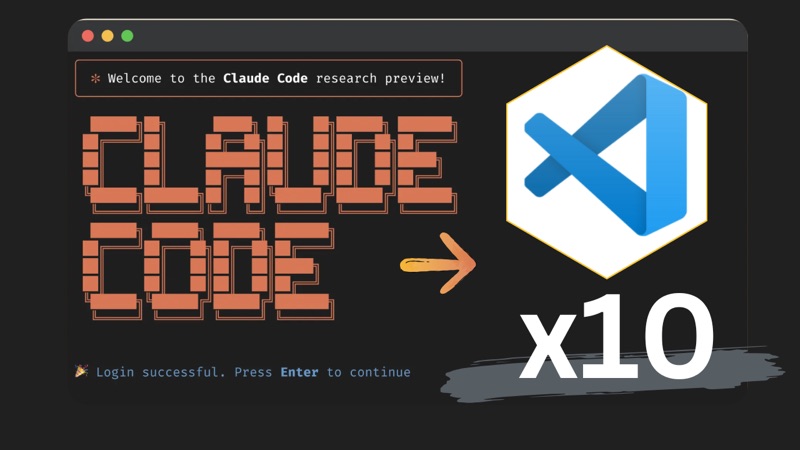
Claude Code integrated with VS Code
AI-Powered Development
AI coding agents don't replace the developer — they amplify the expert. Complex financial models that took days can now be drafted in minutes, with the human reviewing, refining, and deciding.
Hover to see use case
Claude AI in Excel
AI in Financial Analysis
Claude integrated into Excel brings AI reasoning directly into the spreadsheet. Scenario analysis, sensitivity testing, and narrative recommendations — all without leaving the tool where the data lives.
Hover to see use case

Every skill compounds
into the next one.

The ARIMA model made me a better banker. The bank made me a better risk thinker. Risk made me a better communicator. Communication made me independent. And AI is making all of it faster. The stack keeps growing.

Get in touch Read my story